Blog
Glass vs Polycarbonate Veranda: Which Patio Roof Is Best for Your Garden?
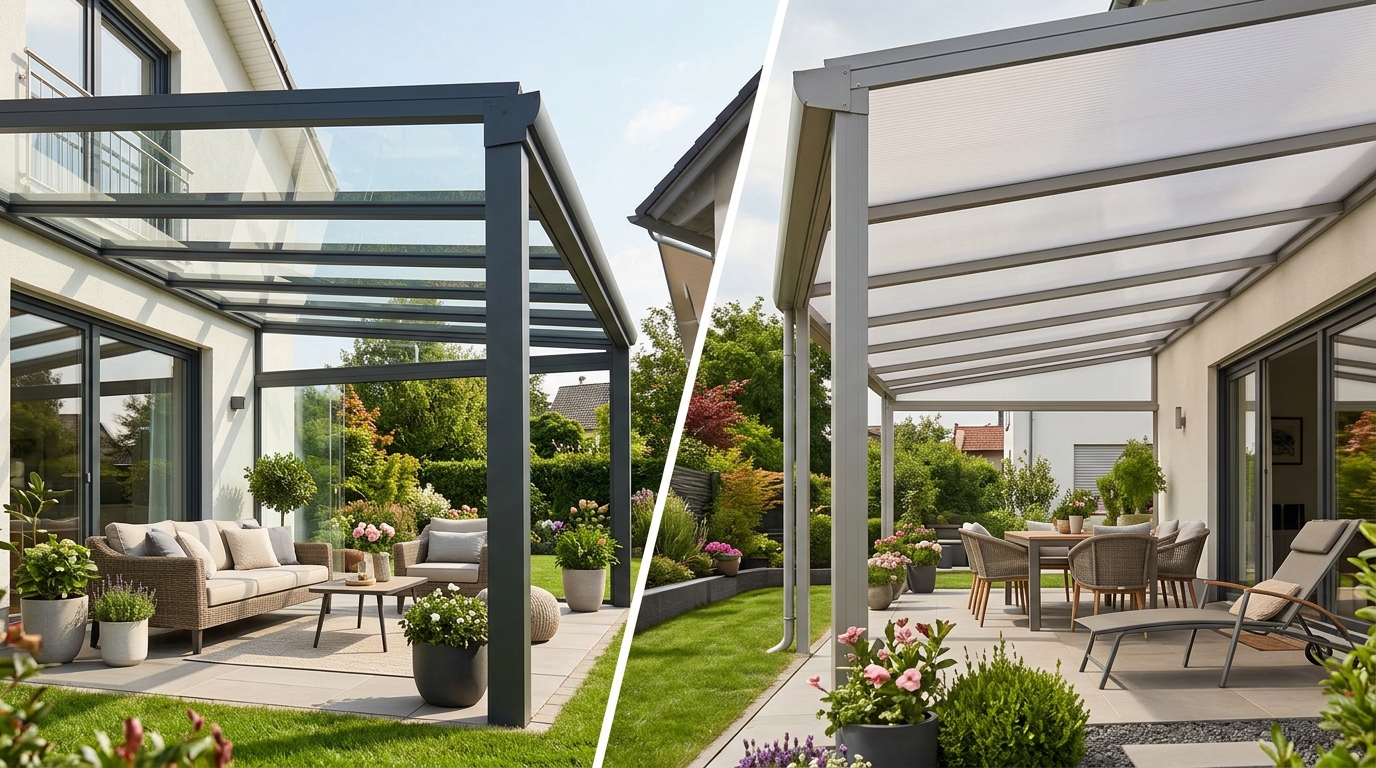
Adding a veranda is one of the most practical ways to get more use from your garden. It creates a sheltered transition between your home and outdoor space, providing somewhere to sit, dine and entertain without being entirely dependent on the British weather.
But once you have decided on a garden veranda, another important decision follows: should you choose a glass or polycarbonate roof?
Both materials can create an excellent patio cover. The right choice depends on your budget, desired appearance, how you intend to use the space and what you expect from the roof.
At Alfresco Styles, we supply both glass and polycarbonate garden verandas, so this guide explains the practical differences rather than suggesting that one material is automatically right for everyone.
Is Glass or Polycarbonate Better for a Veranda?
For homeowners prioritising a premium appearance, excellent visibility and reduced rain noise, glass is often the preferred option. Polycarbonate is typically attractive to buyers looking for a lighter, versatile and more economical roofing solution.
The key is to compare them according to how you will actually use your veranda.
Glass Verandas: The Premium Patio-Cover Option
A glass-roof veranda creates a clean, contemporary appearance and allows natural light into the covered area.
Alfresco Styles offers several glass veranda systems. For example, the EvoGlas system combines powder-coated aluminium framework with 6mm glass, while the MORVELLE system uses 8.8mm laminated safety glass and can accommodate projections of up to 5 metres.
Glass is particularly attractive when maintaining a clear view of the sky and preserving natural light around adjacent windows and doors are priorities.
Another advantage is acoustics. The company’s glass veranda specifications highlight improved acoustic properties compared with polycarbonate, helping reduce the sound of rainfall on the roof.
For a patio used regularly for dining or relaxation, that can make a noticeable difference.
What Are the Advantages of a Polycarbonate Veranda?
Polycarbonate remains an extremely practical roofing material.
Alfresco Styles’ Evolution canopy, for example, uses 16mm triple-wall UV-stabilised polycarbonate and is available in clear, bronze and opal options. Its powder-coated aluminium system incorporates drainage through an integral gutter and support posts.
Polycarbonate’s lower weight makes it suitable for many canopy and veranda designs, while the choice of finishes lets you control the character of the covered area.
Clear polycarbonate is useful where maximising light is important. Opal can provide a more diffused effect, while bronze creates a different visual finish.
For homeowners working to a tighter budget, polycarbonate can also provide an accessible route to creating a substantial covered outdoor area.
Which Looks Better?
This is subjective, but glass generally creates the more premium architectural appearance.
A clear glass roof can complement modern aluminium frames particularly well and is often chosen for contemporary homes where homeowners want the new structure to feel integrated with the property.
That does not mean polycarbonate has to look inexpensive. A well-designed aluminium veranda with correctly specified polycarbonate can still produce an extremely smart result.
Consider the house itself. A contemporary property may suit minimalist aluminium and glass, while the veranda should also complement the scale, colour and architectural character of the building.
Alfresco Styles even offers Victorian-styled glass verandas for properties where a more decorative design is appropriate.
Which Is Quieter When It Rains?
Glass generally has the advantage here.
Rain striking lightweight roofing can be noticeable, particularly during heavier showers. The glass veranda systems available from Alfresco Styles specifically identify improved acoustic performance and reduced rain noise as benefits of their glass glazing.
If you imagine sitting underneath your veranda throughout spring and autumn as well as during summer, acoustics deserve consideration.
What About Maintenance?
Both systems require sensible maintenance.
Glass provides a smooth surface and an attractive clear finish, although—as with windows—it will occasionally need cleaning to maintain its appearance.
Polycarbonate also requires cleaning, and appropriate methods and products should be used to avoid damaging the sheets.
You should additionally keep gutters and drainage routes clear regardless of which roof material you select.
Is Glass Strong Enough for a Veranda?
The important issue is not simply choosing “glass”, but selecting a properly engineered veranda system with the correct type and specification of glazing.
Different Alfresco Styles systems use different glazing specifications. Its Simplicity system uses 6mm toughened glass, while MORVELLE uses 8.8mm laminated safety glass.
The appropriate system depends on dimensions, projection and other installation requirements.
Which Veranda Should I Buy?
Choose glass if your priorities include:
- a premium, contemporary appearance;
- excellent transparency and natural light;
- quieter performance during rainfall;
- a substantial long-term addition to your outdoor living space.
Choose polycarbonate if you prioritise:
- a cost-effective covered patio;
- a lightweight roofing system;
- different clear, bronze or opal finishes;
- practical shelter with considerable design flexibility.
There is no universal winner because gardens, properties and budgets differ.
Creating a Better Outdoor Living Space
A well-chosen veranda can turn a patio that is heavily dependent on good weather into a much more usable extension of your home.
Alfresco Styles offers both glass and polycarbonate veranda systems, including supply-only options and systems for which installation is available.
Before ordering, measure the available width and projection carefully and consider how you want the covered area to function throughout the year.
The best veranda roof isn’t simply glass or polycarbonate—it’s the material and system that best matches your property, budget and plans for the space.