

Blog
What Thickness Polycarbonate Sheet Do I Need? 4mm, 6mm, 10mm, 16mm or 25mm Explained
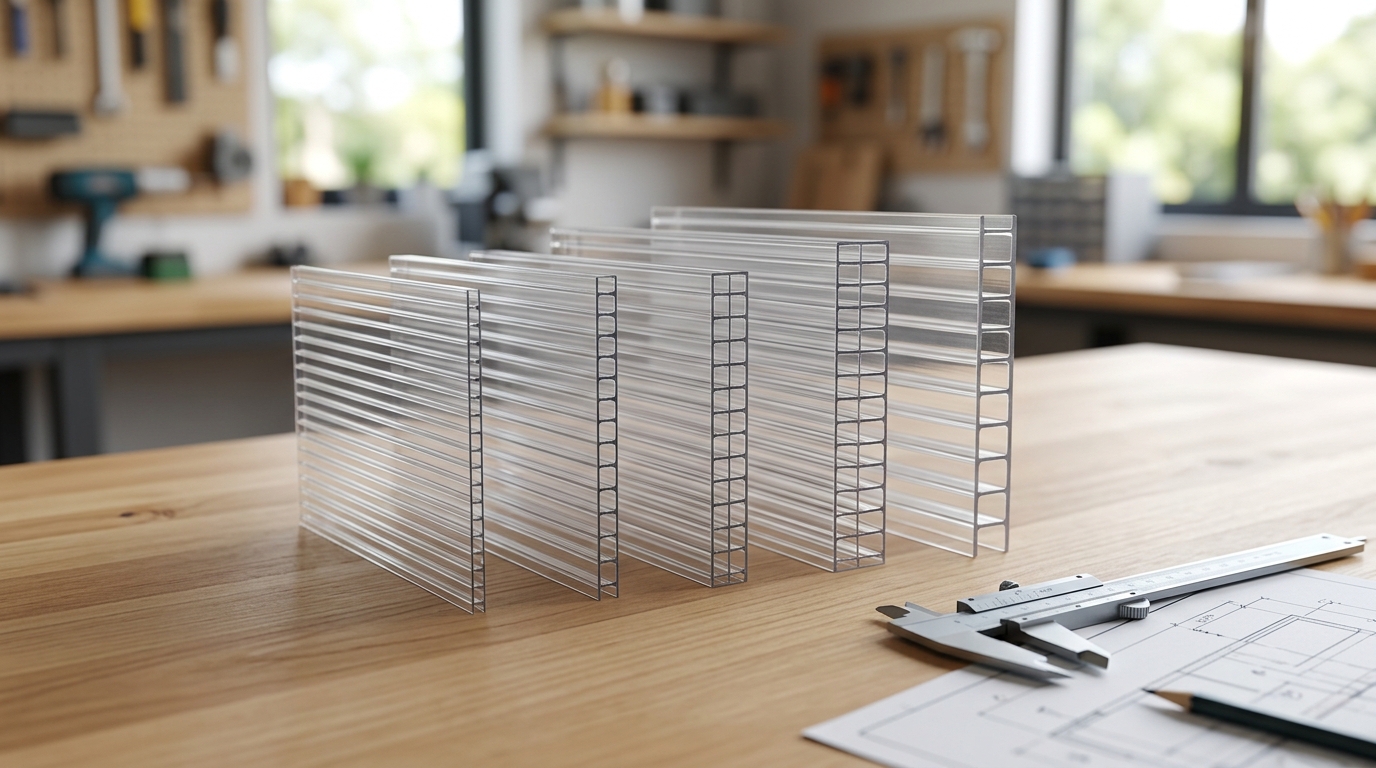
Choosing polycarbonate sheets online can initially seem straightforward. Then you encounter terms such as 4mm twinwall, 10mm twinwall, 16mm triplewall and 25mm multiwall, and suddenly there are considerably more decisions to make.
Thickness matters because different applications place very different demands on roofing material.
A small greenhouse panel does not necessarily require the same specification as a substantial patio canopy or carport roof. Choosing solely on price can therefore be a false economy.
Alfresco Styles supplies a range of polycarbonate sheets, including 4mm, 6mm and 10mm twinwall, 16mm triplewall and 25mm multiwall products, alongside roofing accessories.
Here is how to understand the differences.
What Is Multiwall Polycarbonate?
Rather than being a single solid sheet, multiwall polycarbonate contains layers separated by internal structures.
Depending on the product, you may encounter twinwall, triplewall or other multiwall configurations.
These internal chambers help create a lightweight but rigid panel and make multiwall polycarbonate particularly useful for roofing, greenhouse and canopy applications.
However, thickness should always be selected according to the requirements of the structure rather than by assuming that any polycarbonate sheet will work anywhere.
What Is 4mm Polycarbonate Used For?
At the thinner end of the range, 4mm twinwall polycarbonate is commonly associated with lighter applications such as greenhouse glazing.
Its low weight makes it easy to handle, but that does not make it the appropriate choice for every roof.
If you’re replacing an existing greenhouse panel, check the existing glazing system and required sheet specification before ordering.
When Would You Choose 6mm Polycarbonate?
6mm twinwall provides another relatively lightweight option.
It may be suitable for greenhouse and other light-duty glazing applications where the supporting system has been designed for that thickness.
Again, compatibility matters. Glazing bars, seals and supporting structures need to work together with the selected sheet.
What About 10mm Polycarbonate?
10mm polycarbonate provides greater thickness and rigidity than 4mm or 6mm sheets and can be used across a broader range of projects.
Alfresco Styles notes that thicker polycarbonate sheets offer greater protection, while also costing more per sheet, so the intended application should drive the decision.
This is where buyers should start thinking about the complete roof rather than just the sheet.
What span will the material cover? What supports are underneath it? Which glazing bars will be used? What does the system manufacturer specify?
These questions are more important than simply asking, “Is 10mm strong enough?”
Why Is 16mm Polycarbonate Popular for Canopies and Verandas?
For more substantial outdoor roofing, 16mm multiwall products become particularly relevant.
Alfresco Styles’ Evolution Canopy uses 16mm triple-wall UV-stabilised polycarbonate, demonstrating the type of specification used in a purpose-designed veranda/canopy system. The sheets are offered in clear, bronze and opal finishes.
A thicker multiwall structure provides greater rigidity than lightweight greenhouse glazing and is therefore well suited to appropriately engineered patio-cover systems.
Importantly, though, you shouldn’t take a sheet specification from one system and assume it can be transferred to a completely different structure.
When Should I Consider 25mm Multiwall Polycarbonate?
25mm multiwall sits towards the more substantial end of the range available from Alfresco Styles.
Thicker multiwall sheets can be relevant where the project requires greater panel depth and improved performance compared with thinner products.
For conservatories, substantial roof structures and other demanding applications, the system specification may call for thicker multiwall material.
Before buying, establish the glazing-bar compatibility, required support centres and the specification of the complete roof.
Clear, Bronze or Opal: Does Colour Matter?
Thickness isn’t the only decision.
Clear polycarbonate maximises visibility and light transmission characteristics, making it attractive where a bright covered area is the priority.
Bronze gives the roof a tinted appearance, while opal produces a more diffused visual effect.
The Evolution veranda system, for example, is available with clear, bronze or opal polycarbonate.
Think about where the roof will be positioned. A patio directly outside large doors may have different daylight requirements from a standalone carport.
Don’t Forget the Glazing Bars
A polycarbonate roof is a system.
Sheets need to be correctly supported and joined, which is why glazing bars are so important.
Alfresco Styles supplies both rafter-supported and self-supporting glazing bars, with products designed for glass and polycarbonate applications.
The company’s aluminium capped screw-down glazing bar, for example, incorporates EPDM gaskets intended to provide a weatherproof seal and can accommodate different glazing thicknesses.
So, What Polycarbonate Thickness Do I Need?
As a general purchasing principle:
4mm–6mm: lighter glazing applications such as many greenhouse projects.
10mm: a step up in rigidity for appropriately designed glazing applications.
16mm: commonly relevant to more substantial canopy and veranda roofing systems.
25mm: a thicker multiwall solution for applications whose roofing system calls for increased panel depth.
These are useful starting points—not structural specifications.
The final selection should always match the requirements of your particular roofing or glazing system.
Buy the Complete System, Not Just the Sheet
The biggest mistake DIY buyers can make is focusing exclusively on sheet thickness.
A successful polycarbonate roof depends upon the combination of the sheet, glazing bars, supporting structure, seals, fixings, ventilation/tape details and correct installation.
Alfresco Styles supplies polycarbonate sheets alongside glazing bars and accessories, allowing buyers to select compatible components rather than treating the roof panel in isolation.
If you’re uncertain which thickness or glazing system your project requires, seek technical advice before ordering. Getting the specification right at the beginning is far easier than correcting an unsuitable roof after installation.